
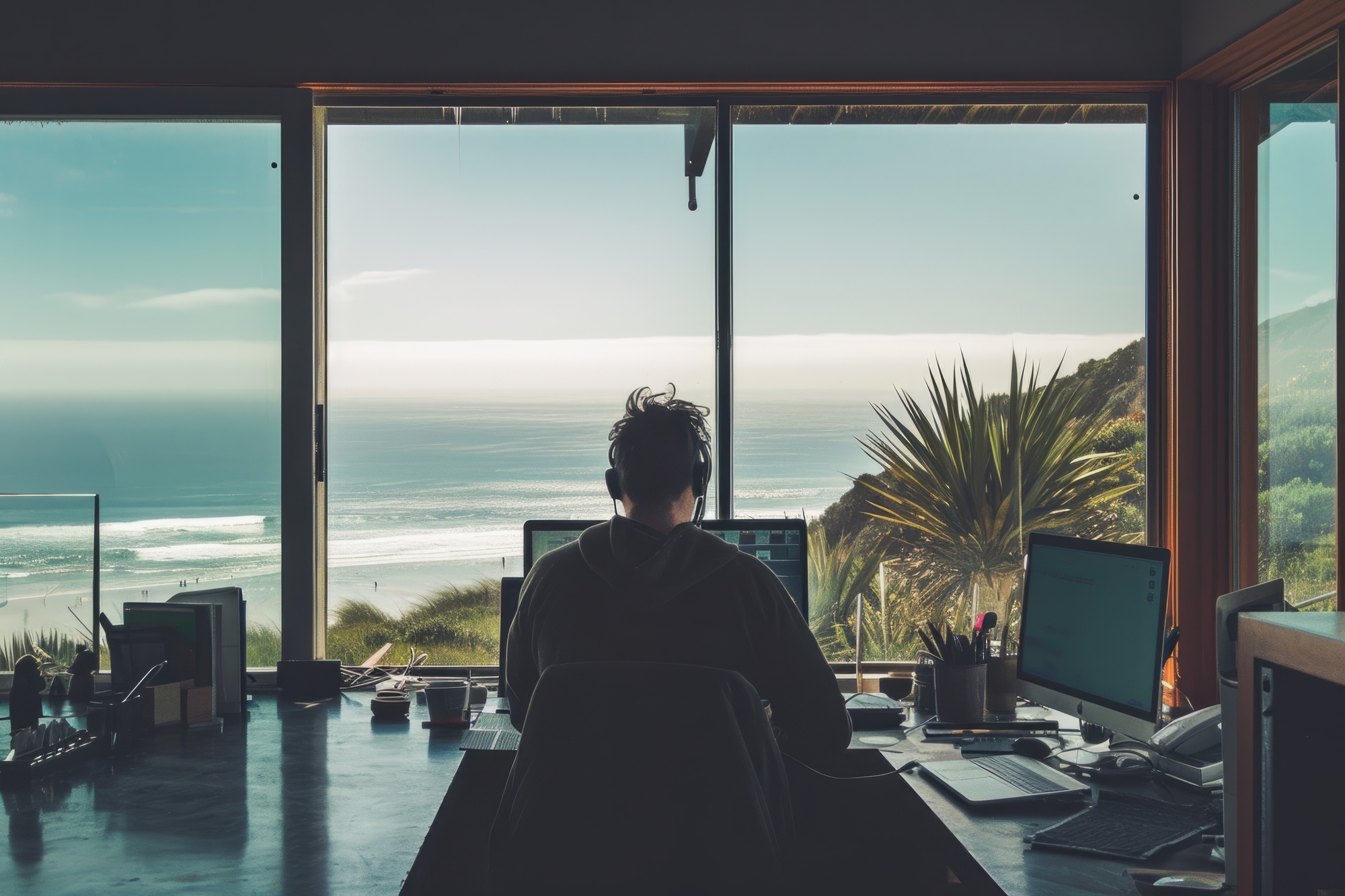
Many managers wrongly assume that working from a holiday resort is a straight path to lower productivity and slipping team discipline. Business reality shows the opposite: a change of scenery often becomes a catalyst for innovation – as long as you know what a workation is and how to skilfully manage a dispersed group’s energy. Understanding how professional duties and recovery fit together lets you turn an ordinary trip into a powerful retention tool. The analysis below explains in detail how to organise a workation while avoiding the legal, tax and logistical pitfalls that often paralyse HR departments. We focus on hard facts about IT security and optimising communication processes. It is essential knowledge for leaders building a modern work culture.
In a nutshell
- ✓A workation is a model that combines professional work with relaxation in an attractive location, and knowing how to organise one means checking IT infrastructure, logistics, and legal and tax formalities.
- ✓Planning a team trip requires a stable internet connection of at least 50 Mbps, ergonomic workstations and secure VPN connections that protect company data.
- ✓Spending more than 183 days abroad in a calendar year usually changes an employee’s tax residency, which creates new obligations for the employer regarding local tax and social security.
- ✓A key element is setting clear availability rules within shared time blocks and checking health and safety requirements at the place where work is performed outside the office.
- ✓A professionally prepared offsite in places such as Barcelona or Gdańsk genuinely raises the Employee Net Promoter Score and improves on-time project delivery by reducing employee stress.
Workation – what does it actually mean in modern business?
A workation is a working model that combines professional duties with relaxation in an attractive destination. It lets employees carry out their tasks remotely while enjoying the new location after hours, which supports recovery without having to use annual leave.
Modern business definitions clearly distinguish this from a standard home office or a sabbatical. While working from home focuses on flexibility of place, a workation emphasises a change of environment to stimulate creativity and improve mental wellbeing. A sabbatical, in turn, is a complete break from duties, usually lasting from several months to a year. Remote work from abroad or another city as part of a workation keeps projects running while offering the benefit of a healthy work-life balance. For many companies it is a key element of their employer branding strategy, with a real impact on talent retention.
The psychological side of this model is based on the theory of cognitive resource renewal. A change of visual and climatic stimuli directly lowers cortisol levels, which is why team efficiency often increases despite being in a resort. Knowing that workation and team building in Barcelona are becoming standard in the IT and creative industries, it is worth understanding that this is not a reward but a modern operational tool. A well-implemented flexible working model helps prevent burnout and builds loyalty through trust and autonomy in choosing where business goals are achieved.
How to organise a workation in 5 steps: a practical step-by-step guide
Successfully organising a trip that combines work with relaxation requires precise logistical and legal planning. To avoid chaos, review your team’s needs, technical infrastructure and HR formalities.
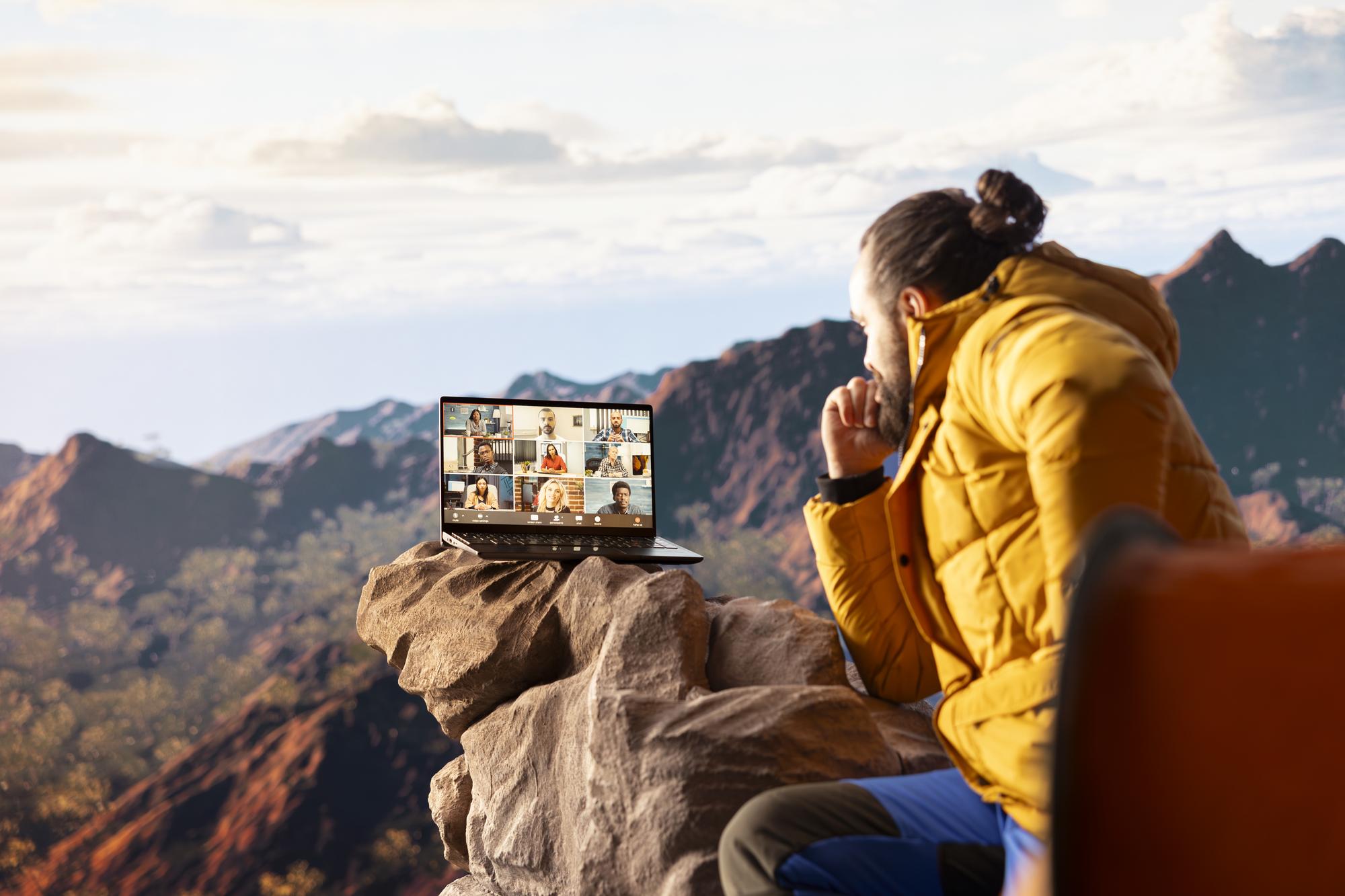
Step 1: Formalities and labour law – what you need to remember
How to organise a workation legally depends on the type of employment. For employment contracts, it is essential to define the place of work and address health and safety outside the company premises. Check employees’ tax residency if a stay abroad is to last longer than 183 days, as this has consequences for social security contributions.
Step 2: Data security and IT infrastructure (VPN, GDPR, health and safety)
Protecting company information is a priority. Encrypted VPN connections are essential, as is securing equipment against third-party access in public places. It is worth preparing a short procedure for what to do if a device is stolen or data leaks over an open network.
Step 3: Choosing the location – from the Baltic to Barcelona
The choice of place determines team efficiency. While the Polish coast favours calm conceptual work, workation and team building in Barcelona offer dynamic energy and access to modern tech hubs. The decision should take time zones and ease of travel for all participants into account.
Step 4: Logistics and technical checklists (internet, power, quiet space)
- A stable connection of at least 50 Mbps.
- Access to ergonomic workstations.
- High-capacity power banks and plug adapters.
- Headphones with active noise cancellation.
Step 5: Agreeing rules with the team and managing time
A clear split between focused work hours (deep work) and free time prevents the line between private and professional life from blurring. It is worth introducing shared time blocks when the whole team is available online, leaving the rest of the day for individual exploration of local attractions.
Tax and legal pitfalls: residency, social security and the 183-day rule
When planning a workation, remember that working remotely from abroad has specific legal consequences that go far beyond choosing a hotel. The key aspects are determining tax residency and understanding how double taxation is avoided.

The main threshold is 183 days spent in a given country in a calendar year. After exceeding it, an employee usually becomes a tax resident of the host country, which obliges the company to register and pay contributions locally. Shorter team trips are simpler, but still require checking double taxation agreements. Social security is another important issue. Under EU regulations, an employee should be covered by the system of only one country, which for trips within the EU is confirmed by the A1 certificate issued by the home social security institution.
According to an experienced tax adviser, the biggest mistake companies make is not having a clear policy on how long employees may work outside their home country. Setting precise rules helps avoid the risk of creating a permanent establishment for the company abroad.
Taking the logistical burden off our clients is our speciality, but we always recommend a health and safety review of the remote workstation. Remember that the employer is responsible for an employee’s safety even when they choose workation and team building in Barcelona instead of the office in Warsaw. Well-prepared remote work rules protect both sides against unforeseen claims.
Workation & corporate events – why invest in team trips?
Investing in professionally organised offsites is today a foundation of employee loyalty. Strategically combining work duties with an inspiring environment allows the team to renew its cognitive resources, which translates directly into more innovative projects.
Group trips require precise logistics, which is why the role of local experts is invaluable. We take the burden of organisation off your shoulders, taking care of every detail – from a stable symmetrical connection to unique team building activities. Professional support lets managers focus on business goals instead of checking hotels’ technical standards or booking restaurants. Choosing a trusted partner guarantees that workation and team building in Barcelona or Gdańsk will run smoothly and build lasting bonds within the team.
| Benefit area | Impact on the organisation | Key indicator (KPI) |
|---|---|---|
| Company culture | Greater trust and better communication | Employee Net Promoter Score |
| Efficiency | Less stress and a creative approach | On-time sprint delivery |
| Employer branding | Standing out in the job market | Cost of talent acquisition |
Local knowledge as the key to success
Working with a partner who has local connections lets you discover places off the beaten path that mass tourism never reaches. It is exactly these authentic experiences that bring a group together most strongly, creating shared memories beyond the office. Knowing how to organise a workation safely and in line with local requirements minimises operational risk for the company.
Frequently asked questions
What is the main difference between a workation and a traditional holiday or team-building trip?
A workation combines professional work with relaxation in an attractive location. Unlike a traditional holiday, the employee remains professionally active and carries out their daily tasks, but does so from a place associated with leisure. A typical team-building trip, on the other hand, focuses almost exclusively on building relationships and group activities after working hours. A workation keeps the company’s operations running while changing the environment, which has a positive effect on the creativity and wellbeing of the whole team.
Who covers the costs of a workation and what should they include?
Costs depend on the chosen standard of accommodation, the location and additional services such as renting a coworking space or organising local activities. The employer usually covers transport, accommodation and work infrastructure, while meals are often agreed individually. Professional organisation helps optimise the budget thanks to local contacts and business packages, which in the long run translates into higher efficiency and employee loyalty.
What are the most common mistakes when planning a company workation on your own?
The most common mistake is not checking the quality of the internet connection at the accommodation, which paralyses the team’s work. Another pitfall is poorly planning the balance between duties and free time, which leads to frustration. Companies also often forget to clearly define employee availability rules across time zones. To avoid these problems, it is worth relying on experts who will provide technical and logistical infrastructure tailored to your industry.
Is it better to choose a workation in Barcelona or in Poland, for example in Gdańsk?
Choosing a workation in Spain gives you access to excellent business infrastructure in Barcelona combined with Mediterranean culture. Poland, and Gdańsk in particular, offers a unique combination of a seaside climate and a fast-growing tech sector. The choice depends on your team’s preferences and business goals. In both locations we provide comprehensive support, taking care of logistics so you can focus on team bonding and key projects in a new, inspiring environment.
Summary
Organising a trip that combines work and relaxation requires a balance between regulations and the team’s needs. The key to success is choosing a place that guarantees stable infrastructure and inspires creative work. Remember that a professional workation and team building in Barcelona is not just a change of scenery, but an investment in employee loyalty and a fresh perspective on everyday business challenges.
We take the logistical burden off your shoulders, looking after every technical and legal detail so you can focus on your operational goals. A well-planned offsite translates into a real increase in efficiency.
Key takeaways from this article:
- Remote work rules must be clearly defined in company policy and comply with health and safety requirements.
- The choice of location depends on access to fast internet and a coworking space.
- Stays longer than 183 days may change an employee’s tax residency.
- Group trips build stronger team bonds than standard office work.
About the author

Diana Niewiadomska
Founder of INNER CIRCLE
Diana Niewiadomska is the event organiser behind Inner Circle by Diana. She specialises in end-to-end organisation of workations, corporate events and team retreats in Barcelona, Gdańsk and across Europe. She is responsible for programmes that combine remote work with local experiences, including accommodation, coworking spaces and business support.